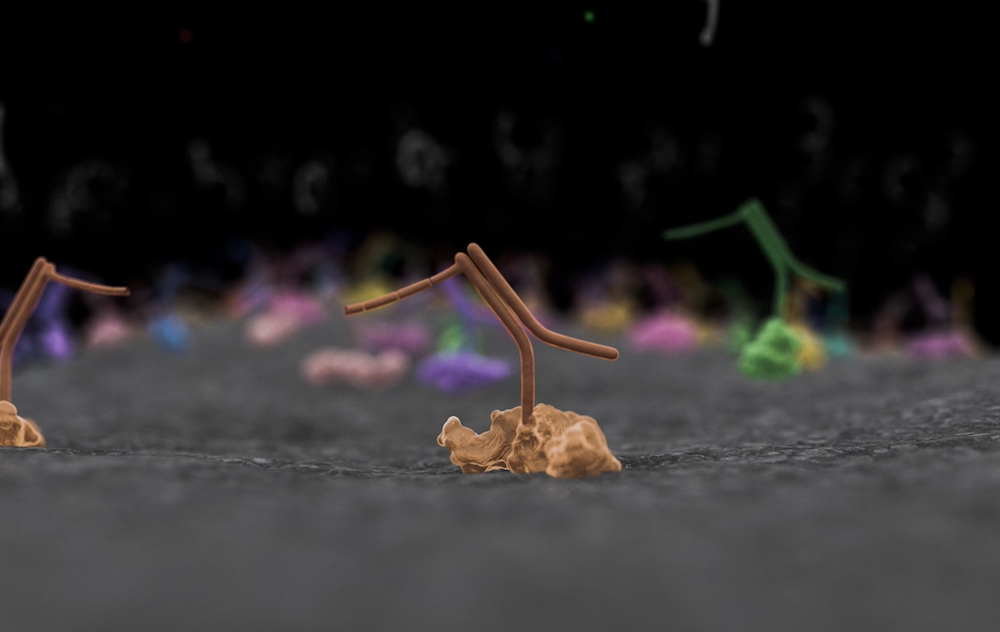

Cell Surface Protein Interactomics
Why spatial protein analysis matters
Cell surface proteins govern how immune cells sense, communicate with, and respond to their environment. Conventional single-cell proteomics measures which proteins are present, but not how they are spatially organized into functional systems. Yet proteins rarely act alone. Their proximity, colocalization, and organization into clusters and membrane domains, the cell surface architecture, directly shape signaling, receptor interactions, and cellular responses. Importantly, this architecture is dynamic and can change independently of protein expression, allowing cells with similar abundance profiles to exhibit fundamentally different functional responses.

Mapping the cell surface architecture
The Proximity Network Assay enables high-throughput analysis of protein organization across thousands of single cells at nanoscale resolution. Spatial relationships between proteins are reconstructed into single-cell Proximity Networks, enabling quantitative measurements of protein abundance, clustering, and colocalization in parallel. This allows researchers to identify functional membrane domains, characterize cell states, and uncover spatial signatures linked to disease biology and therapeutic response.